Blog
How to choose RG ball?

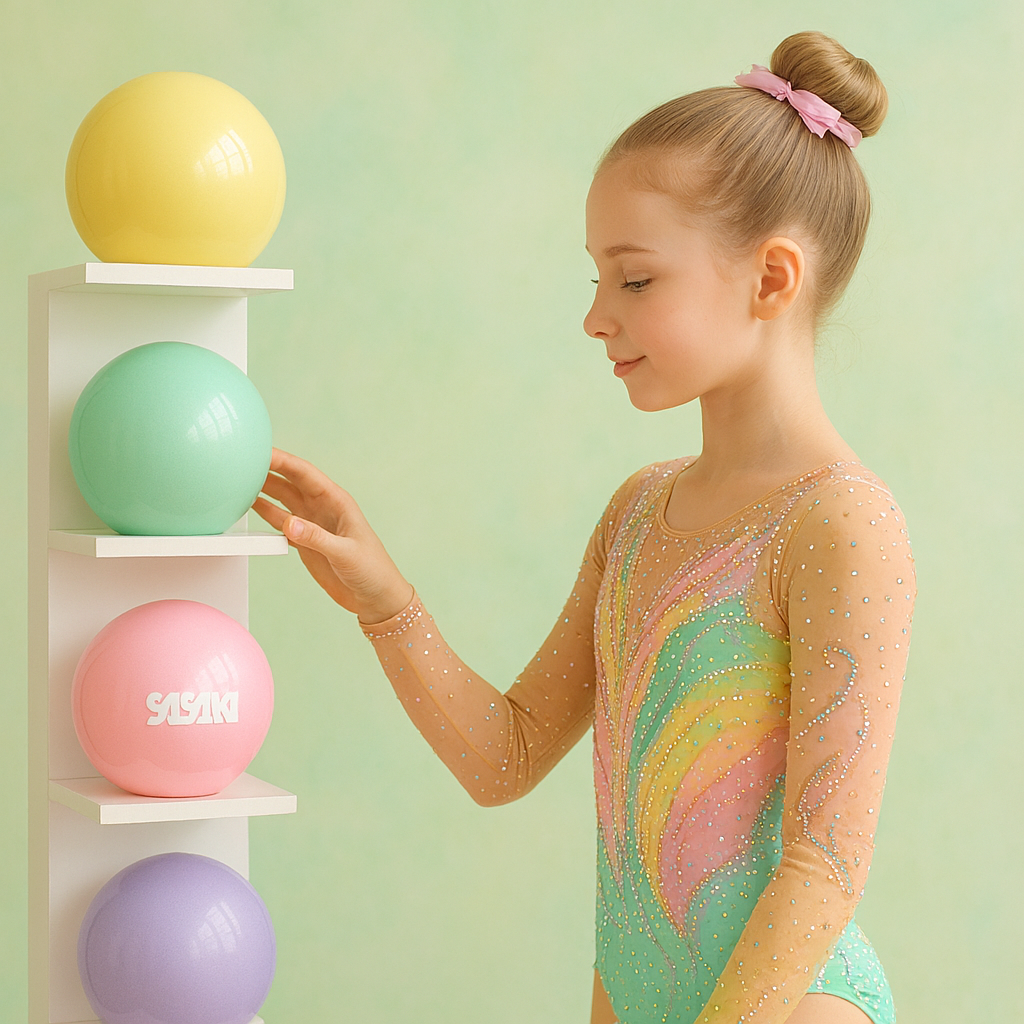
Rhythmic gymnastics is a sport that combines elegance, technique, and artistic expression. One of the most graceful apparatus used in this sport is the ball. It allows gymnasts to perform smooth rolls across the body, high throws, and flowing movements that make routines visually impressive. Choosing the right ball is essential because it helps the gymnast perform elements with better control and confidence.
In this article, we will look at the most important factors to consider when choosing a rhythmic gymnastics ball, as well as some of the most popular brands used by gymnasts around the world.
Ball Size
The size of the ball is one of the most important factors. In rhythmic gymnastics, the standard ball diameter usually ranges between 16 and 18 centimeters.
Younger gymnasts and beginners typically use smaller balls of 16–17 cm, as they are easier to hold and control. Older or more advanced gymnasts usually use balls measuring 18–18.5 cm, which meet the requirements for competitions.
Here are some general recommendations:
- Children up to 7 years old → 16 cm balls are recommended.
- Children up to 140 cm tall or up to 9 years old → 17 cm balls are recommended.
- From 9 years old and above → 18 cm (or 18.5 cm) balls are recommended.
➡️ These are approximate guidelines. Each coach may have different preferences depending on the gymnast’s training level and technique. Our goal is simply to provide guidance and help when choosing the most suitable ball.
Choosing the correct size allows the gymnast to hold the ball comfortably in the palm and perform movements smoothly.
➡️The ball should have FIG approved stamp if to be used in international competitions.
Best brands for balls
There are several well-known brands in rhythmic gymnastics that are widely used by gymnasts and coaches due to their quality and reliability.
➡️ Sasaki balls are popular because they:
– offer excellent grip
– maintain their shape for a long time
– are made from high-quality rubber
– are often used by professional gymnasts
➡️ Another well-known Japanese brand is Chacott. Their balls are known for:
– very smooth and comfortable surface
– excellent balance
– bright and elegant colors
➡️ The Italian brand Pastorelli is also widely used in rhythmic gymnastics. Their balls are known for:
– good durability
– stable shape
– a wide variety of colors
Color and Design
Color may seem like a minor detail, but it can play an important role during performances. Many gymnasts choose a ball that matches the colors of their leotard or the theme of their routine.
Bright and vibrant colors are often preferred because they are more visible on the competition floor and highlight the gymnast’s movements.
Conclusion
Choosing the right rhythmic gymnastics ball is an important step for every gymnast. Factors such as size, weight, material, and grip should always be considered according to the gymnast’s age and skill level.
In addition, selecting a trusted brand ensures better quality, durability, and comfort during both training and competitions. A well-chosen ball helps gymnasts perform their routines more confidently, gracefully, and with better control.